
This post may contain affiliate links. Please read our privacy policy.

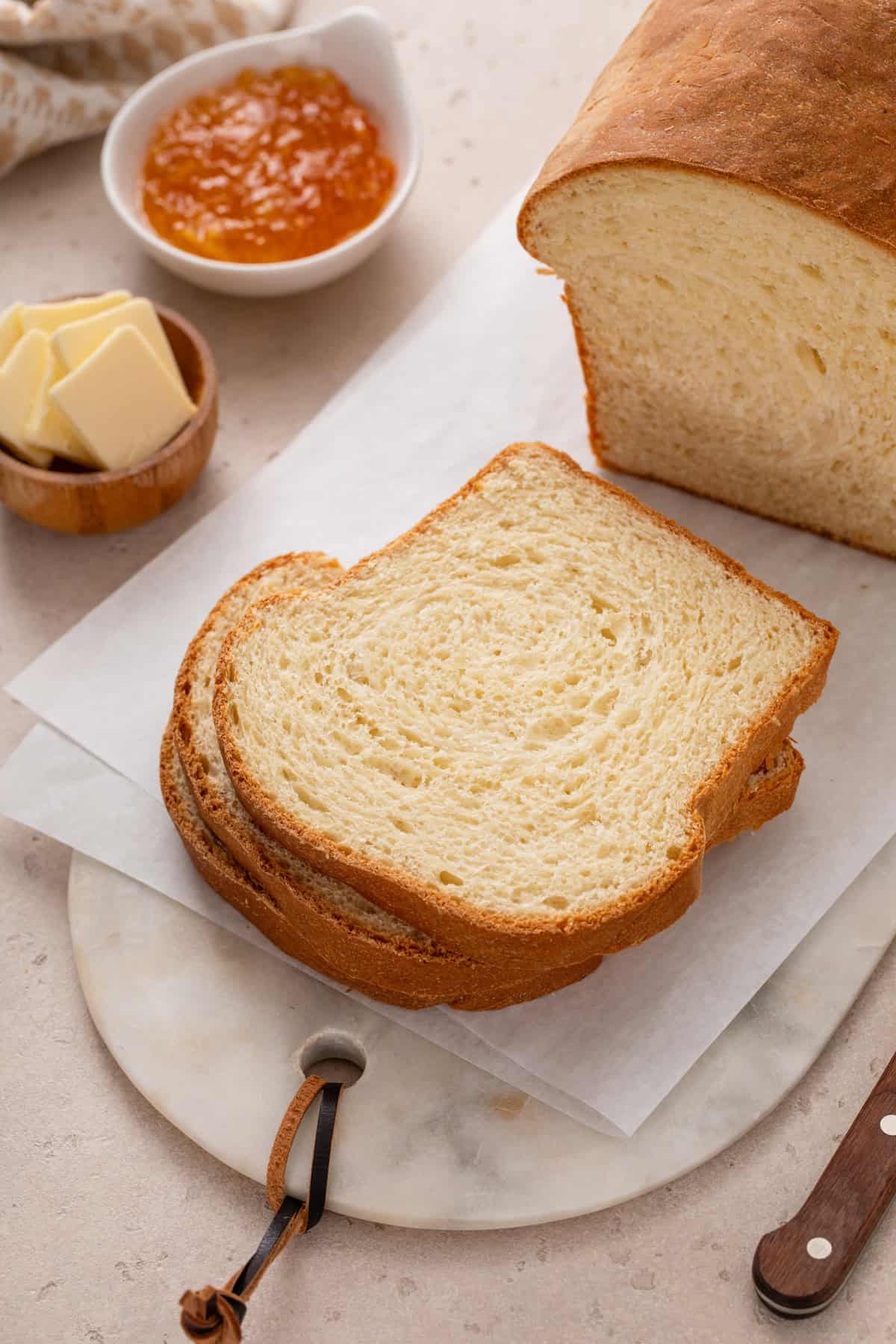
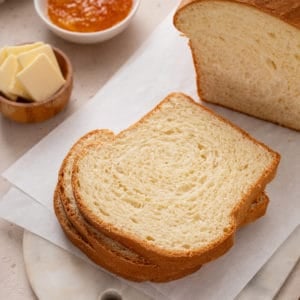
Soft and fluffy potato bread is the perfect homemade bread recipe, even for those new to baking with yeast! Turn it into toast, make a grilled cheese sandwich, or slice into it warm from the oven.
There’s something about the new year that just makes me want to bake bread.
The holidays are obviously for making all kinds of cookies and candy and other treats. But January and February make me want to cozy up with a fresh slice of homemade bread.
It doesn’t hurt that the hot oven keeps me from feeling as cold in the middle of winter, too.
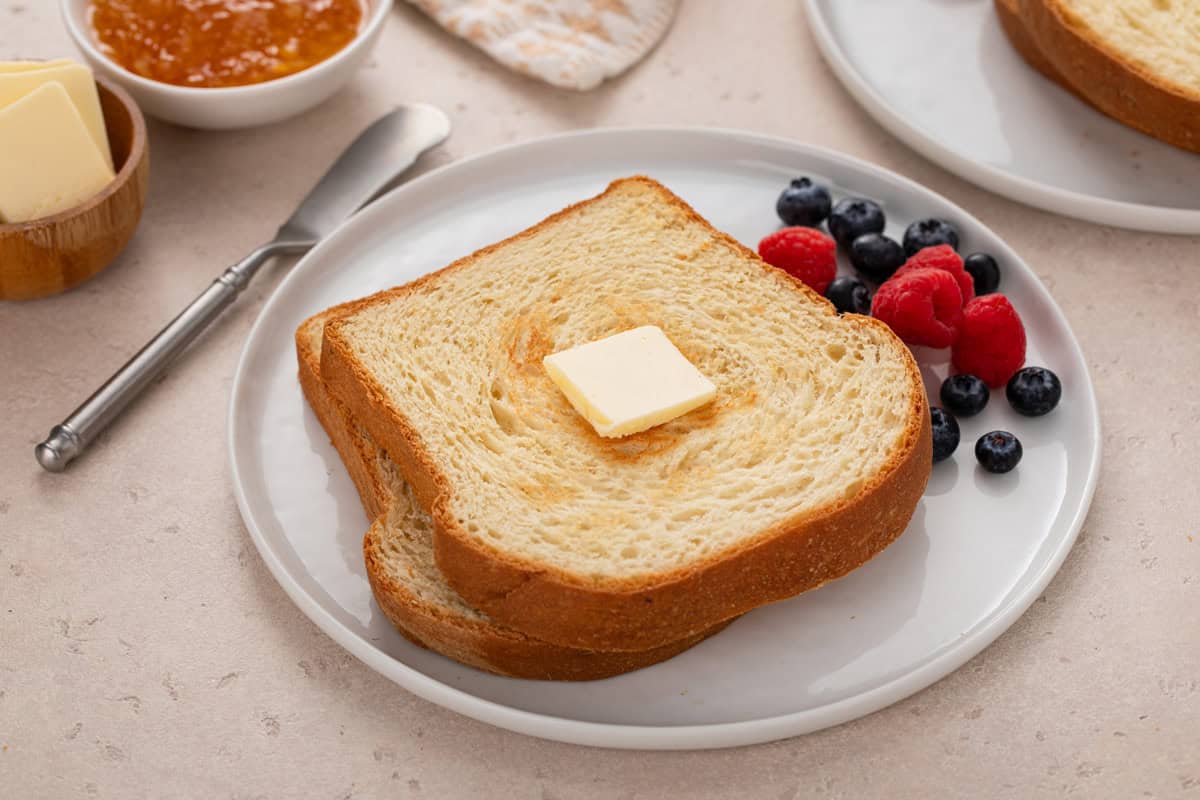
This potato bread is a great beginner friendly bread recipe that everyone will love. It’s soft with a crisp crust and makes fantastic toast or grilled cheese.
What is potato bread?
If you’ve never had potato bread, you’ve got to try it. It’s a classic yeast bread that has mashed potatoes or potato flakes worked into the dough.
Adding potatoes into the mixture helps keep the bread soft and tender on the inside, while giving it a really nice crispy crust on the outside.
This particular potato bread recipe uses cooked and mashed potatoes. You can use leftover mashed potatoes or cook a russet potato just for this bread; both work great!
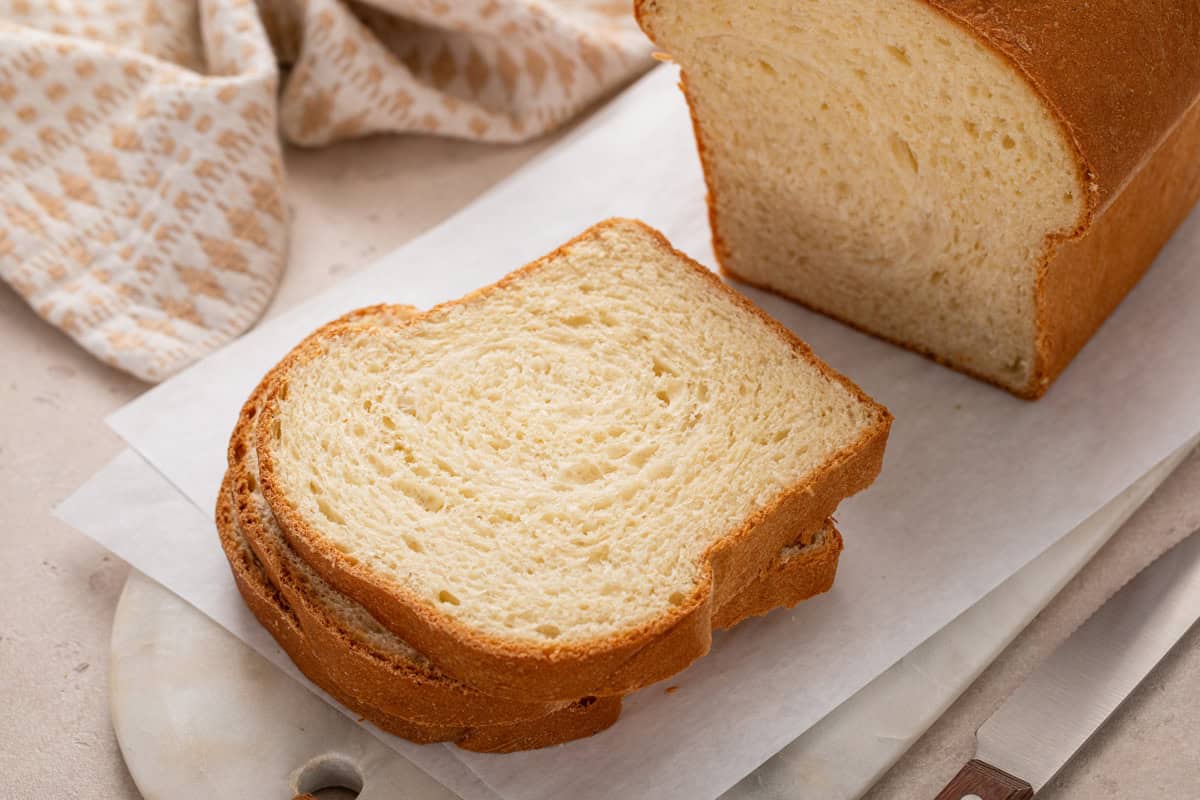
I love to toast this bread and slather it in butter and jam (or slow cooker apple butter) for breakfast. You could also use it to make an amazing grilled cheese sandwich or turn it into make-ahead breakfast casserole or blueberry french toast casserole.
You can also turn this recipe into potato rolls for a delicious addition to your dinner table! How good would they be alongside a bowl of broccoli cheese soup??
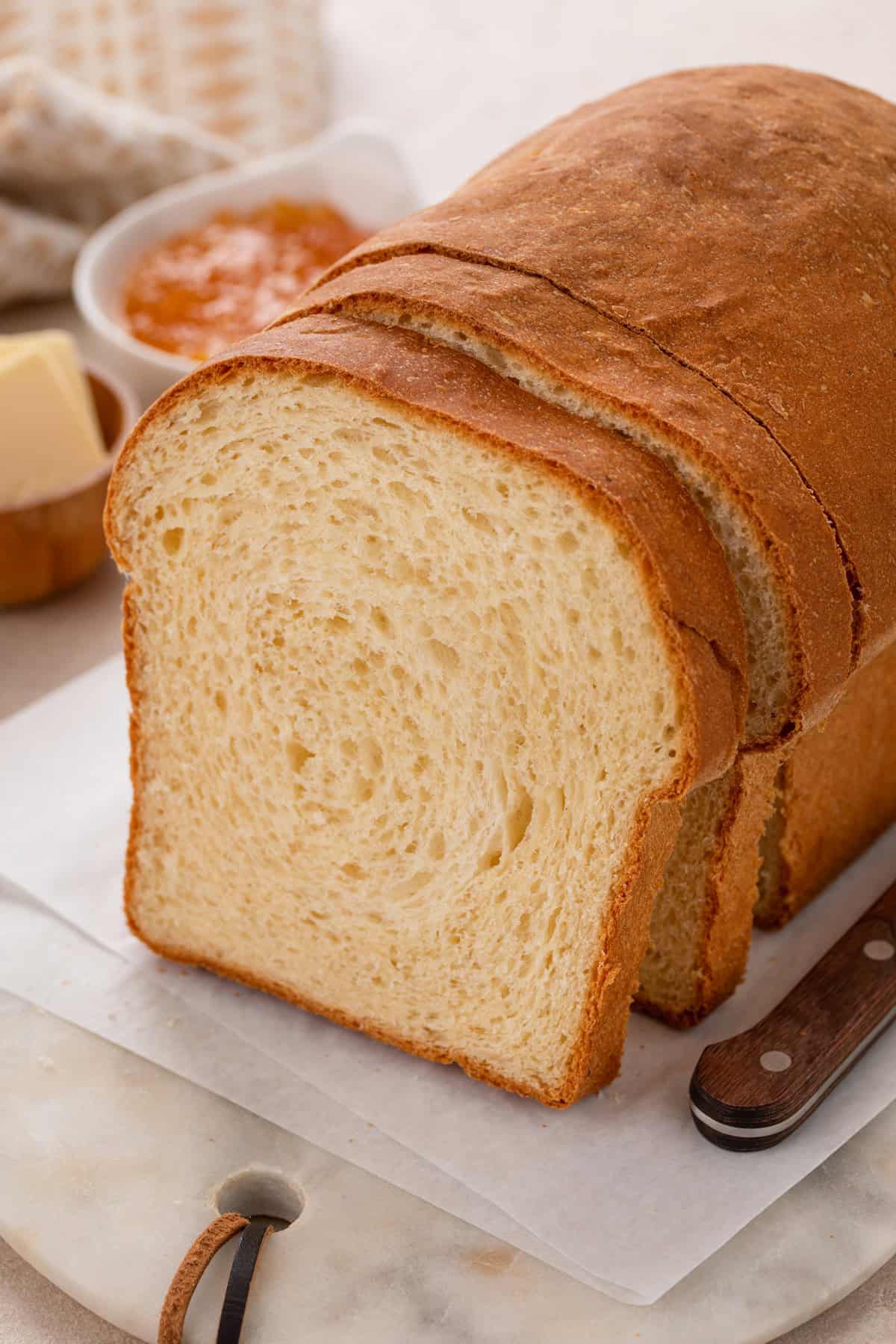
How to make homemade potato bread
Even if you’re new to baking with yeast, you can make this bread. It uses instant yeast and only requires 1 rise, so you can be pulling fresh bread from the oven in just about 2 hours!
Ingredients you’ll need
To make your homemade potato bread, you will need:
- All-purpose flour: Save the bread flour for your chewy chocolate chip cookies (yes, I’m serious!). All-purpose flour helps keep this bread nice and soft.
- Instant yeast: Sometimes labeled as “rapid rise yeast.” Do not use bread-machine yeast or active dry yeast in this recipe.
- Fine sea salt: My preferred type of salt for baking.
- Water
- Milk: Any milk works fine here.
- Honey
- Unsalted butter
- Large egg
- Cooked and mashed potato: You can use leftover mashed potatoes if you have them or you can boil or bake a potato to use for this bread. Russet potatoes work best.
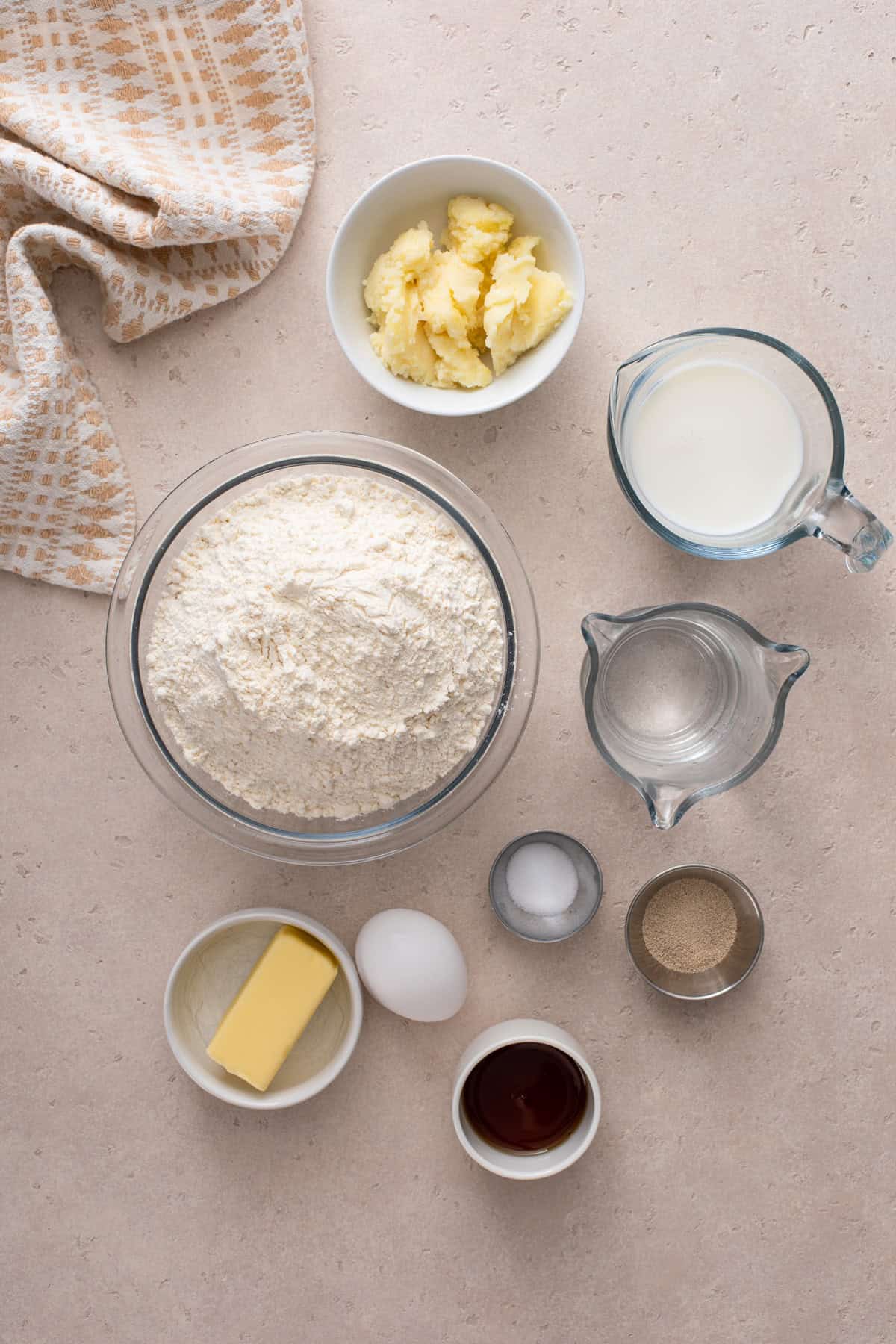
Note that if you used leftover mashed potatoes that have extra ingredients in them, such as garlic mashed potatoes or sour cream and chive mashed potatoes, those flavors will transfer to your bread.
Before you start baking, make sure you know how to measure flour correctly. This will help your bread turn out perfect every time!
Making this bread
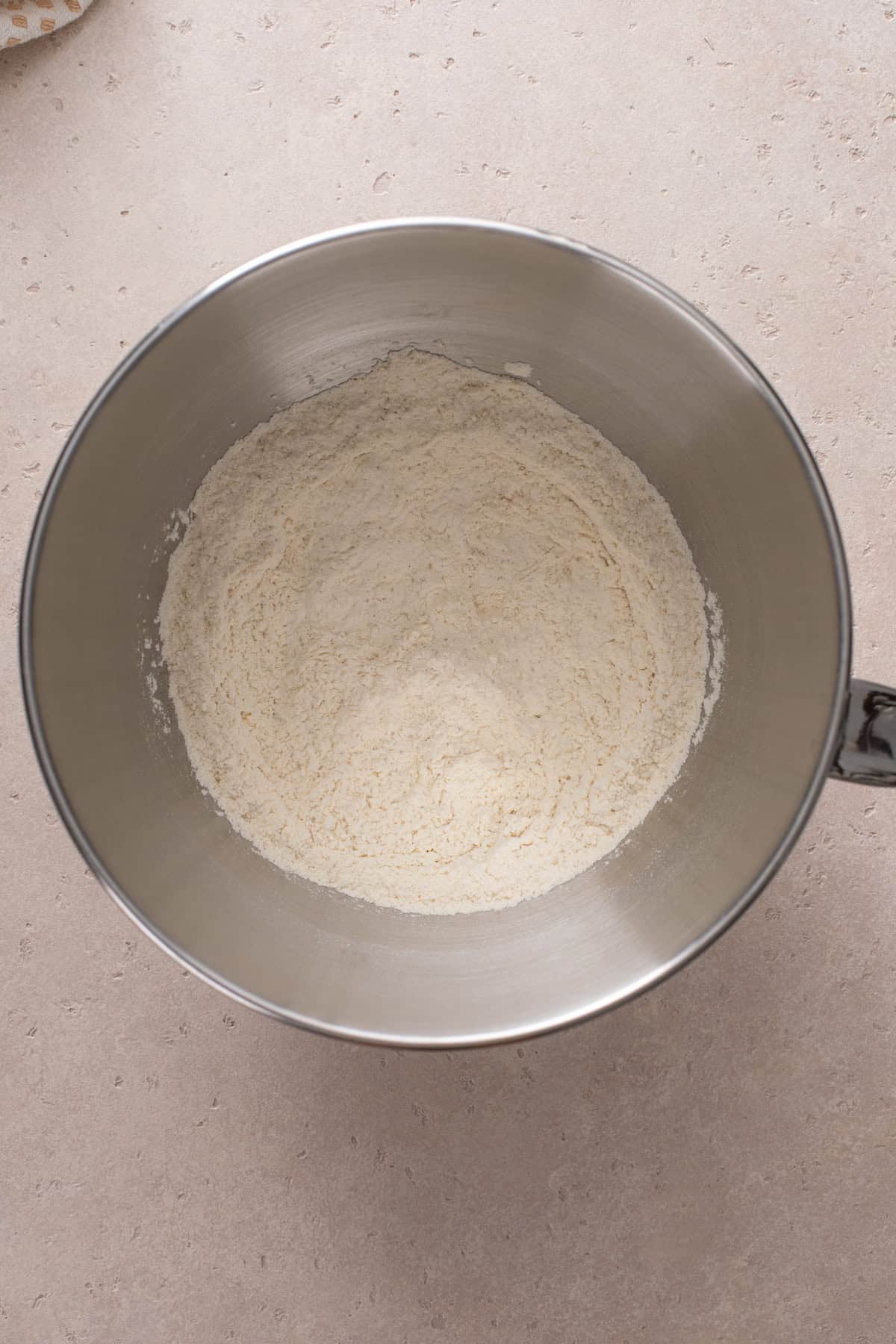
To make the potato bread dough, add 2 cups of the flour to the bowl of a stand mixer along with the yeast and the salt.

In a separate microwave-safe bowl, add the water, milk, honey, and butter. Microwave for about 1 minute, or until the mixture is very warm but not hot. You want it to be between 110°F-120°F.
The butter might not fully melt—that’s ok!
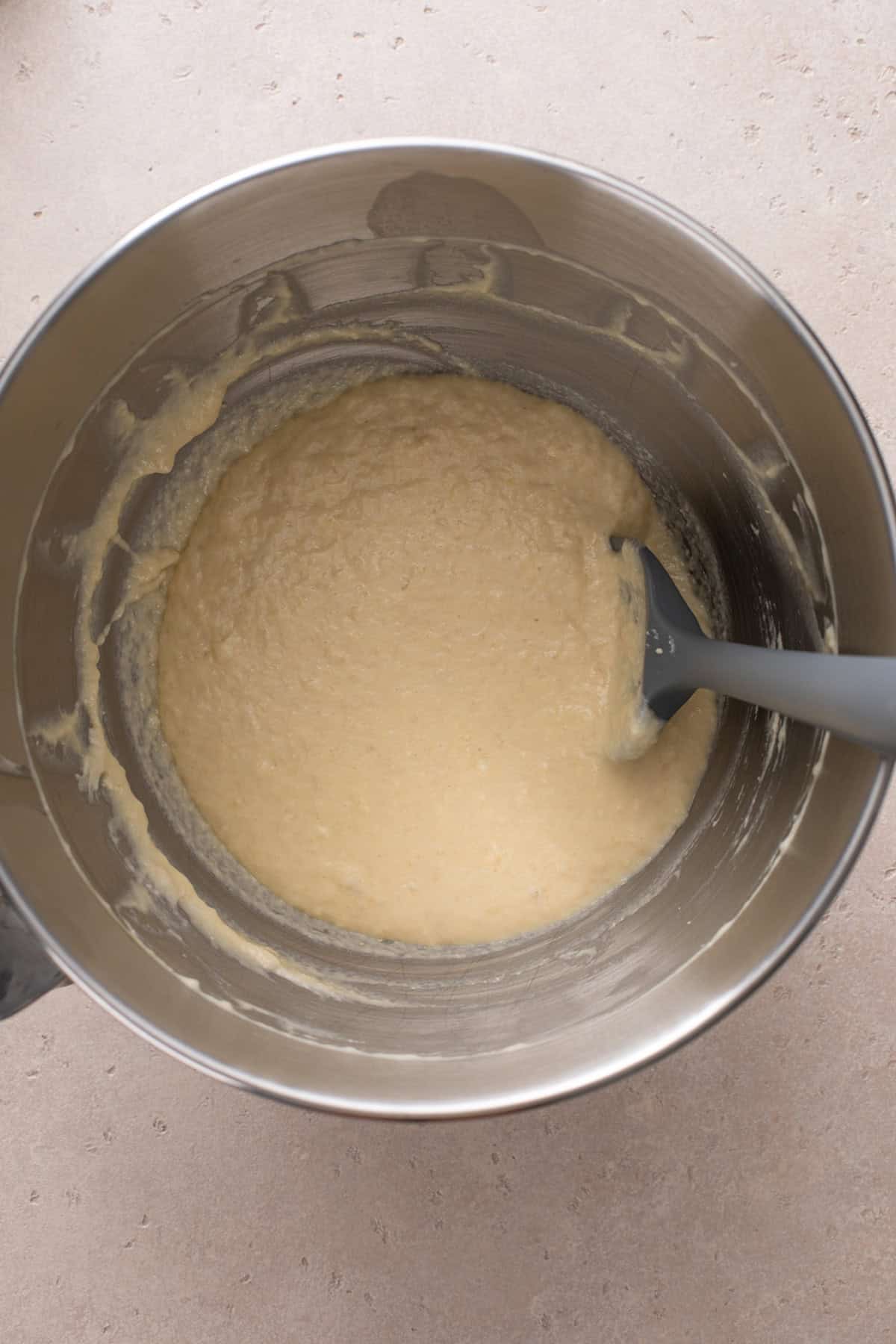
Add the liquid mixture the the dry ingredients and mix on medium speed with the paddle attachment, scraping down the sides of the bowl as needed.
When the mixture is well combined, add the egg and the mashed potato. Mix again until combined.
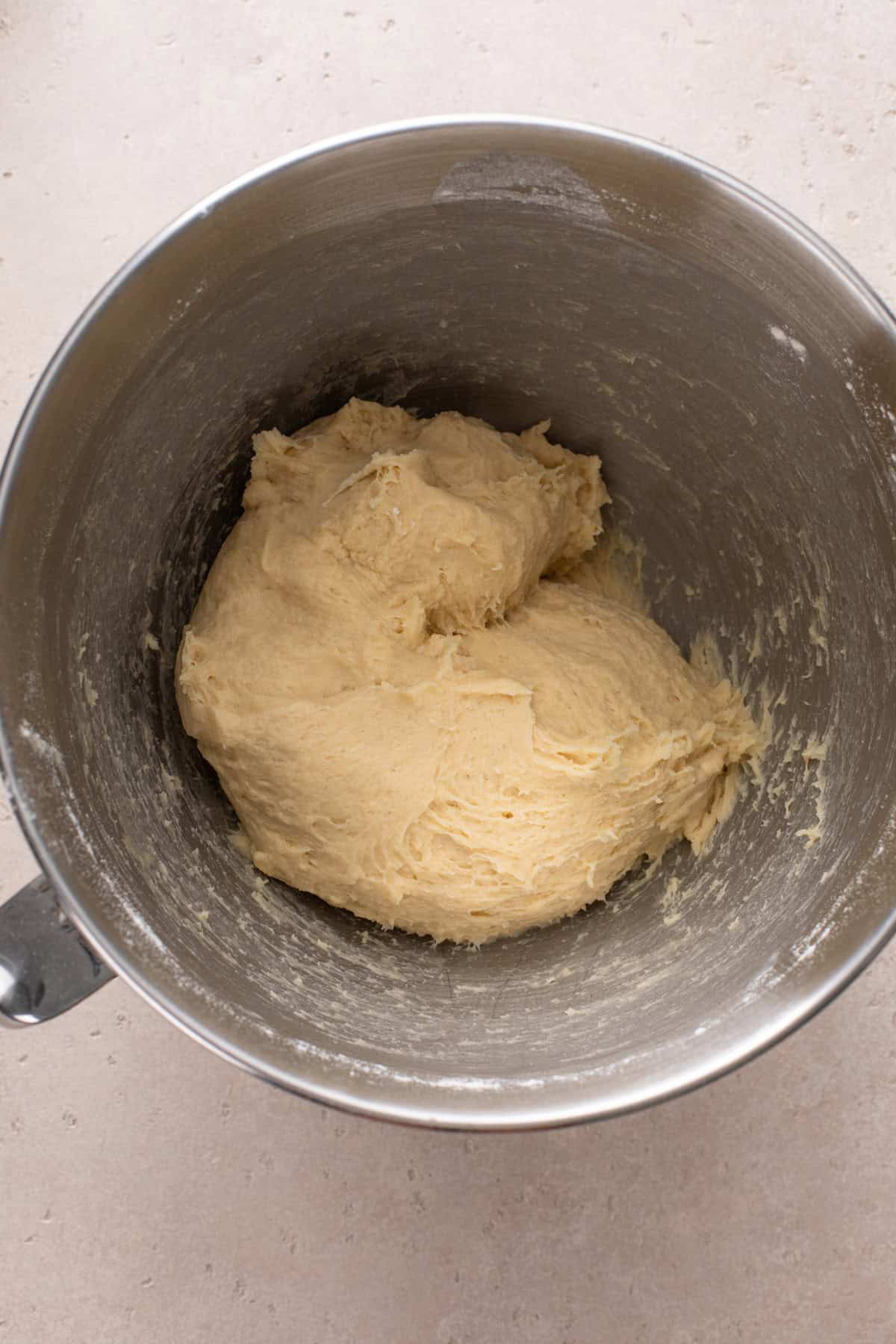
Switch out the paddle attachment for the dough hook. With the mixer on low speed, add another cup of the flour.
Once that is mixed, add the rest of the flour, 1/2 cup at a time, just until the mixture comes together in a slightly sticky dough that clings to the dough hook.
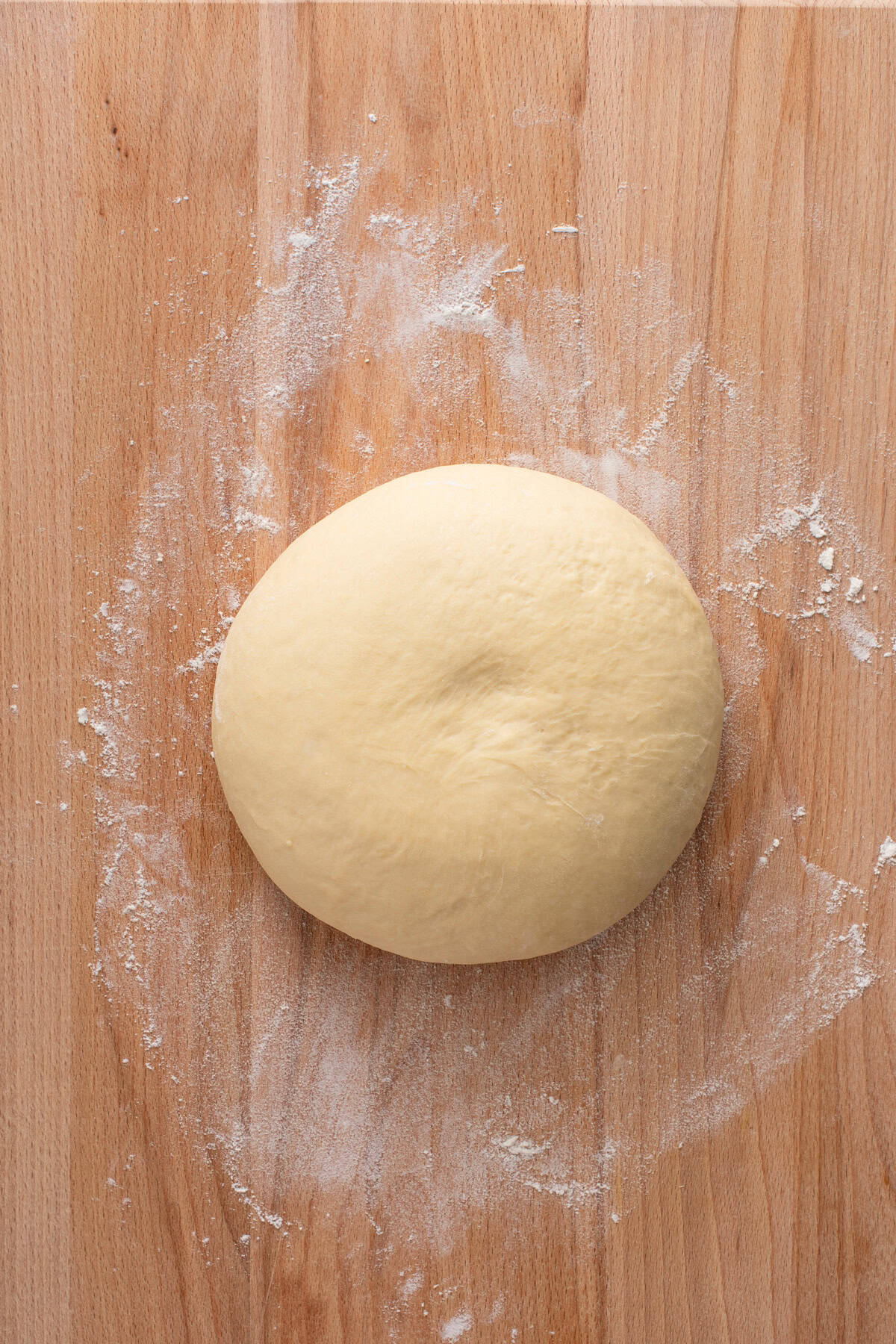
Knead the dough by hand on a floured surface until smooth and elastic, about 5 minutes. You can also knead it with your stand mixer on medium speed for about 3 minutes if you prefer not to do it by hand.
Lightly cover the dough with a clean towel and let it rest for 10 minutes.
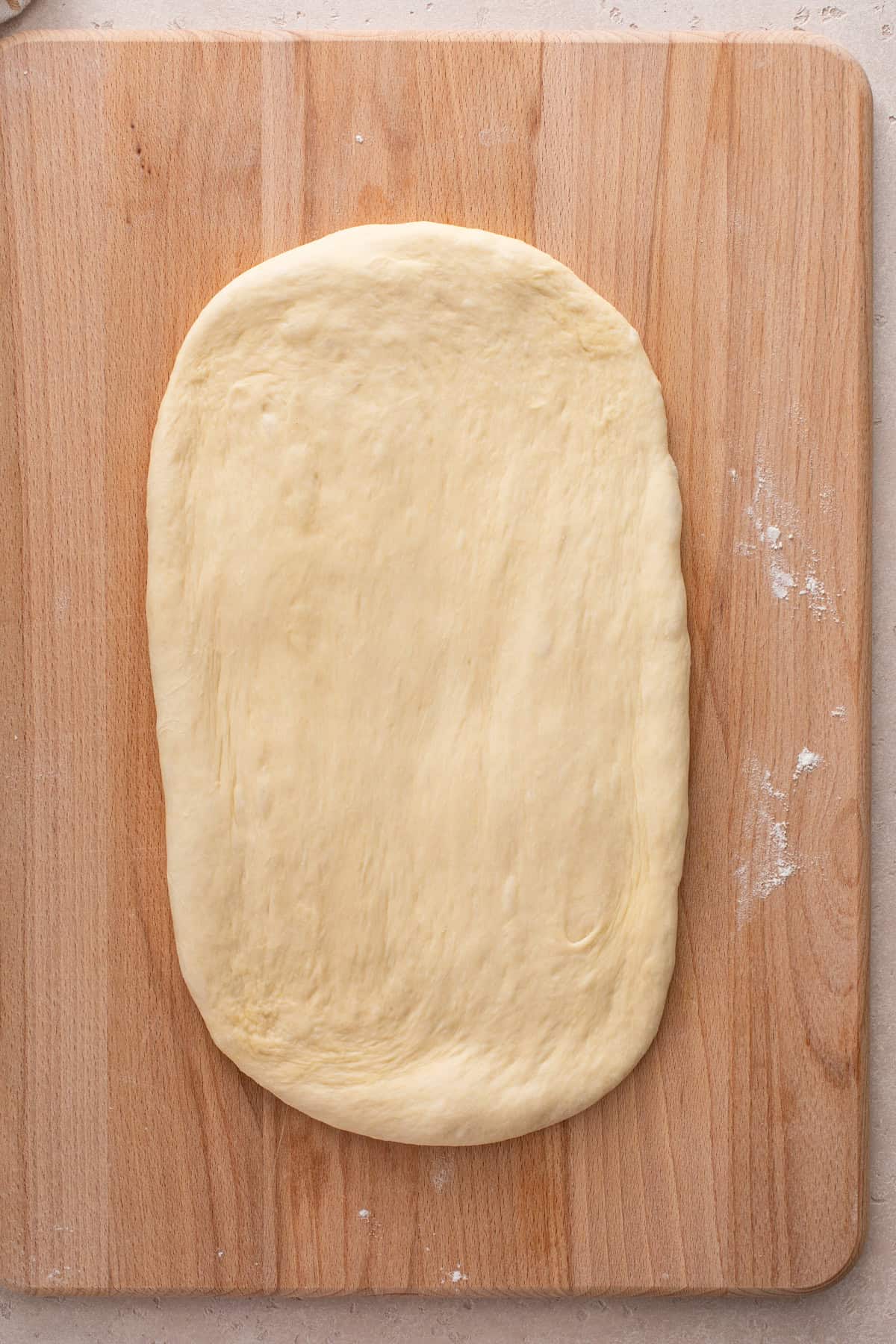
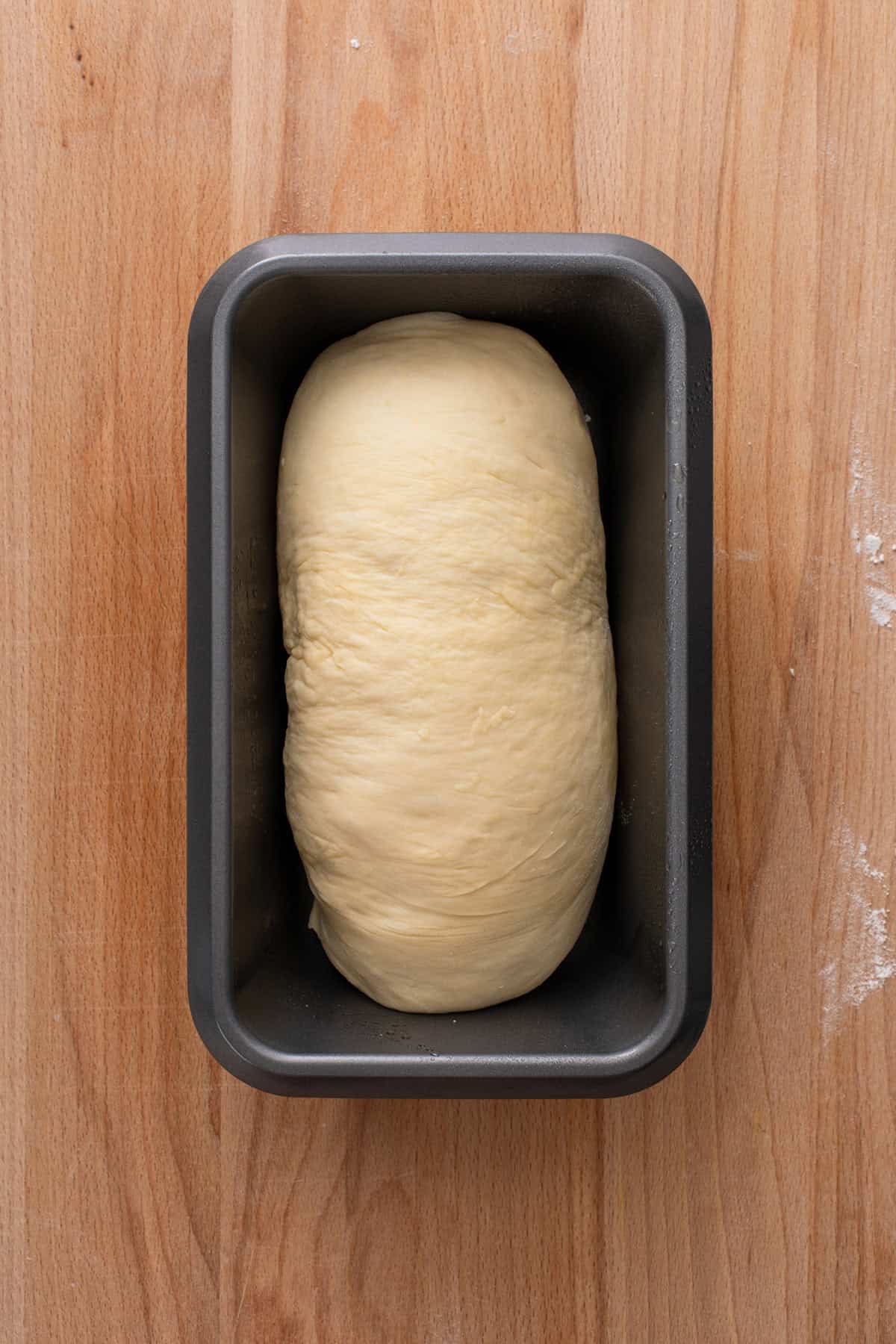
Roll or pat the dough into an 8×15 inch rectangle. Starting from the short side, tightly roll the dough into a log. Place into a greased 10×5-inch loaf pan, seam-side down.
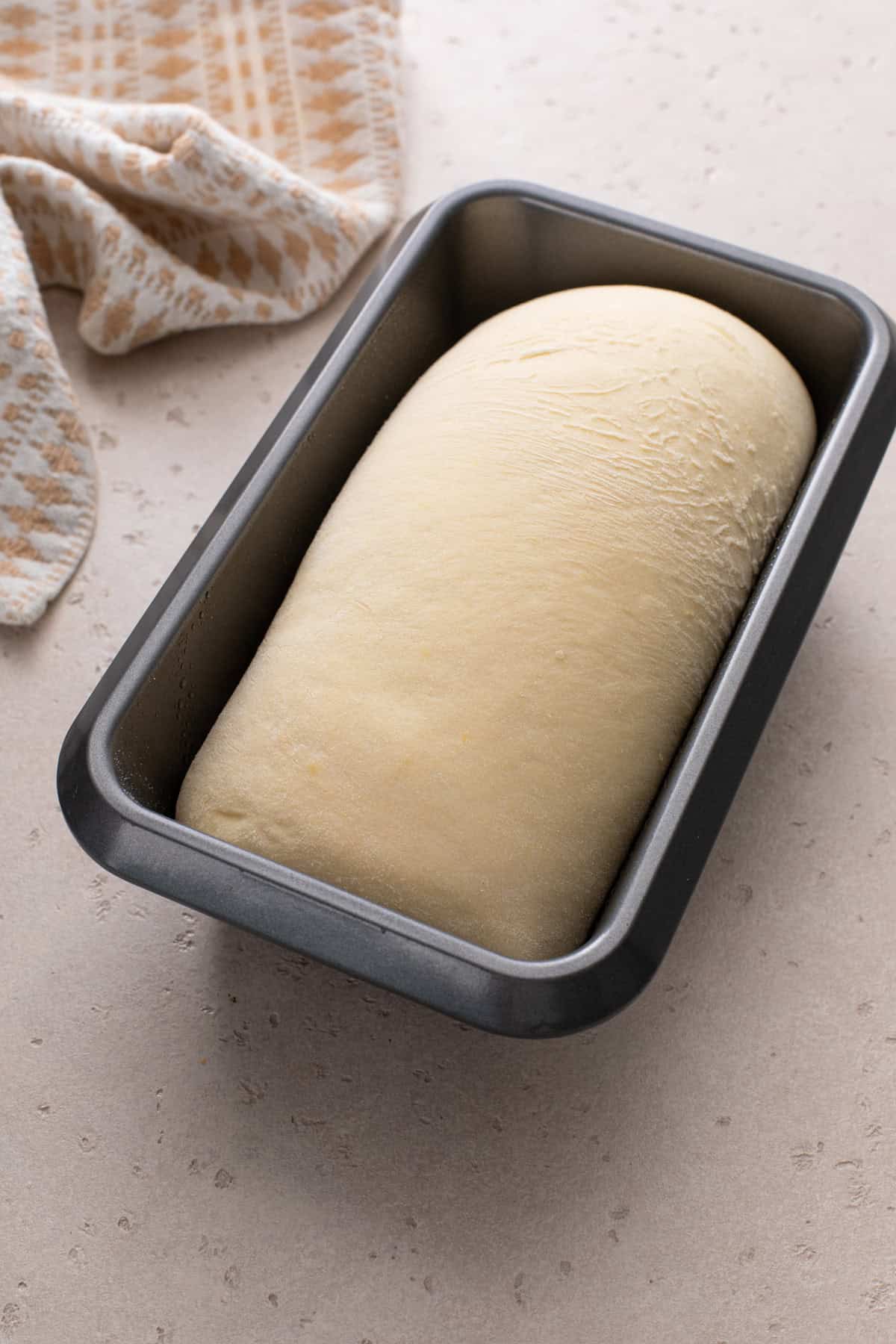
Cover the loaf lightly with a kitchen towel and place in a warm spot to rise for about 40-50 minutes, or until doubled in size. The top of the loaf should be just below the top edge of the loaf pan.
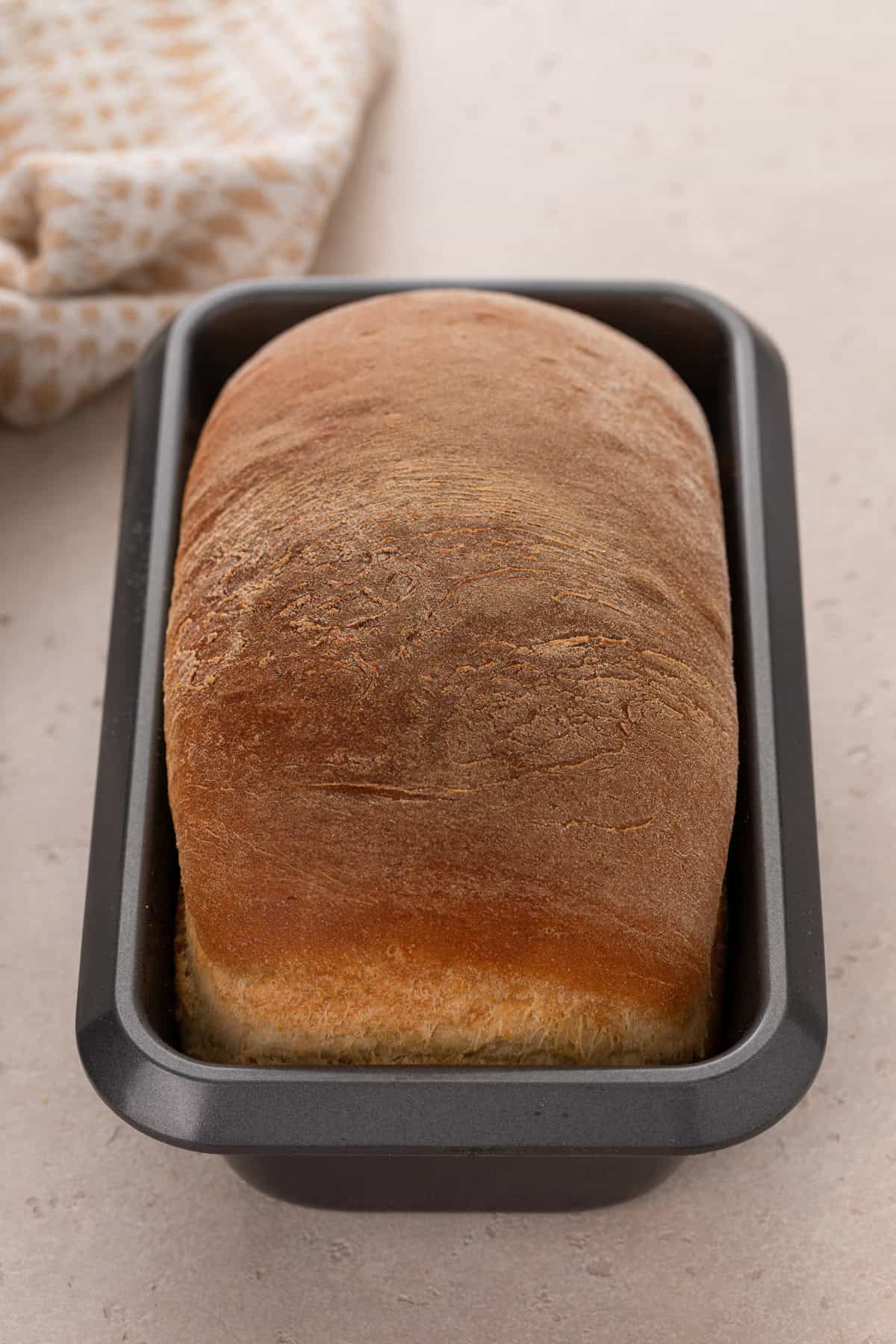
While the bread is rising, preheat the oven to 375°F. Bake for 35-40 minutes, or until deeply golden and the internal temperature reads 190°F on an instant-read thermometer.
Carefully turn the potato bread out onto a wire rack to cool for at least 1 hour before slicing and enjoying.
Storing homemade bread
Homemade breads such as this potato bread, cinnamon swirl bread, or english muffin bread don’t have the same preservatives in them as most grocery-store breads. So you want to store them in a way that helps them stay fresh as long as possible.
Here are a few bread storage options:
- Store loaves in paper or reusable bread bags. Don’t store them in plastic – plastic traps in moisture so the bread goes bad faster.
- Get a bread box. They look really nice on your counter and they are designed to keep bread fresh for longer at room temperature!
- Keep bread in a cool, dry place. Try to store your bread away from warm and/or damp spots in your kitchen, such as near the refrigerator or dishwasher.
- When in doubt, freeze it! Bread freezes really well – this potato bread is no exception. Wrap the bread tightly in plastic wrap followed by a layer of foil and freeze it for up to 3 months. You can defrost it before slicing and toasting or place it in a warm oven to thaw and heat it through.
Frequently asked questions
Sprinkle a clean countertop with all-purpose flour. Place your dough on the floured surface.
Use the base of one palm to push the dough away from you, then use your other hand to fold the dough back over itself and turn it 90 degrees. Repeat this process for about 5 minutes, adding more flour to the countertop if needed if things get too sticky.
The more you practice the kneading motion, the easier it will become. Kneading does take time, so don’t try to rush it; it’s important for building structure in the dough for your potato bread.
When you’re making any kind of yeast dough, pay the closest attention to the visual cues in the recipe for when the dough is done rising and ready for the next step. For example, if the recipe says that the dough should be “doubled in size” or “until it’s just below the edge of the pan.”
The times given in the recipe will give you an idea of how long this might take, but the exact time will vary depending on how warm your kitchen is.
One easy way to know if the dough is done rising is through the “poke test.” Gently press an indentation into the dough with your finger. If the dough slowly springs back, it’s ready for the next step.
If the dough does not spring back, it needs more time to rise.
Many ovens these days have a “proofing” setting that works great. It keeps the oven at the perfect temperature for the dough to rise, but not so hot that it would kill the yeast.
If your oven doesn’t have this feature, some good options (especially if your kitchen is cold) are to set the dough on top of or near the stove while the oven preheats, or in the laundry room on top of the dryer while it is running.
Another option is to turn only your oven light on; this can slightly warm the inside of the oven to help the dough rise.
Without being in your kitchen with you, it’s hard to know exactly what might have happened for your potato bread to not rise, but there are a few common reasons to start with.
Make sure your yeast is fresh. If your yeast isn’t fresh, it won’t rise. I store my yeast in the freezer; this will keep it good for way longer than storing it in the pantry.
Another common issue is that the milk mixture was too hot when you mixed it with the other ingredients. If the milk is too hot, it can kill the yeast, which will keep the dough from rising.
I recommend using an instant-read thermometer to make sure your milk is around 115℉. This is a great temperature for activating the yeast without killing it.
If your dough is rising but just rising more slowly than you think it should, your kitchen might be a bit too cold. Some newer ovens have a dough proofing setting which works great.
If your oven does not have a setting for proofing, try placing the dough in the oven with only the light turned on (don’t turn the actual oven on!). The light will warm the inside of the oven just enough to help the dough rise nicely.
If you do not have a stand mixer, you can make this bread by hand in a mixing bowl. Just make sure to thoroughly stir the potato into the dough to evenly distribute it. You don’t want large chunks of potato in the dough.
You may also need to knead it for a few extra minutes to get it smooth and elastic if making it by hand.
If you do not have a 10×5-inch loaf pan, you can use a 9×5-inch pan instead. Note that your loaf will rise just above the edge of the pan and may need to bake for an extra 5-10 minutes for the center to reach 190°F on an instant-read thermometer.
If you invest in a 10×5-inch pan, it’s great for making Dominique Ansel’s banana bread and brown butter pumpkin bread.
Potato Bread
Ingredients
- 4 cups all-purpose flour
- 2 ¼ teaspoons instant yeast 1 envelope
- 1 teaspoon fine sea salt
- ½ cup water
- ½ cup milk
- ¼ cup honey
- ¼ cup unsalted butter
- 1 large egg
- ⅓ cup cooked and mashed potato (see notes)
Instructions
- In the bowl of a stand mixer fitted with the paddle attachment, add 2 cups of the flour, the yeast, and the salt.4 cups all-purpose flour, 2 ¼ teaspoons instant yeast, 1 teaspoon fine sea salt
- In a large microwave-safe measuring cup or a microwave-safe bowl, add the water, milk, honey, and butter. Microwave on high for about 1 minute, or until the mixture is warm but not hot – it should read between 110°F-120°F on an instant-read thermometer. Do not worry if the butter does not fully melt.½ cup water, ½ cup milk, ¼ cup honey, ¼ cup unsalted butter
- Add the milk mixture to the dry ingredients and mix on medium speed until well combined, using a spatula to scrape down the sides of the bowl as needed.
- Add the egg and the mashed potato and mix on medium speed until well combined, again scraping the sides of the bowl as needed.1 large egg, ⅓ cup cooked and mashed potato
- Switch to your dough hook attachment. With the mixer on low, add 1 more cup of the flour. Mix until combined. Add the final cup of flour, ½ cup at a time, adding just enough flour to make a soft but still slightly sticky dough that clings to the dough hook.
- Turn the dough out onto a lightly floured surface. Knead until smooth and elastic, about 5 minutes. (You can also knead the dough with your stand mixer on medium speed for about 3 minutes if you prefer.)
- Lightly cover the dough with a clean kitchen towel and let it rest for 10 minutes. Meanwhile, lightly spray (1) 10×5-inch loaf pan with nonstick spray.
- After 10 minutes, pat or roll the dough into (1) rectangle roughly 8 inches x 15 inches. Starting from the short side, tightly roll the dough into a log. Place into the prepared loaf pan seam-side down.
- Place the shaped loaf in a warm place and cover with the kitchen towel. Let rise for about 40-50 minutes, or until doubled in size. The top of the dough should have risen just below the top edge of the loaf pan. The dough is done rising if, when you make an indentation in the surface of the dough with your finger, the dough slowly springs back. If you make the indentation and the dough does not spring back, it needs more time to rise.
- While the loaf rises, preheat oven to 375°F.
- Bake at 375°F for 35-40 minutes, or deeply golden and the interior temperature reads 190°F on an instant-read thermometer.
- Carefully turn the bread out onto a wire rack to cool. Let cool for at least 1 hour before slicing.
Notes
- Feel free to use leftover mashed potatoes in this recipe. If you do not have leftover mashed potatoes, prick a large russet potato all over with the tines of a fork or a paring knife and microwave or bake the potato until soft. Mash the interior of the potato with a fork and let cool before adding to the dough.
- If you do not have a stand mixer, you can make this bread by hand. Just make sure to thoroughly mix the potato into the dough to evenly distribute it. You may also need to knead it for a few extra minutes to get the dough smooth and elastic if making it by hand.
- If you do not have a 10×5-inch loaf pan, you can use a 9×5-inch pan instead. Note that your loaf will rise just above the edge of the pan and may need to bake for an extra 5-10 minutes for the center to reach 190°F on an instant-read thermometer. Loosely cover the top of the loaf with aluminum foil near the end of the baking time if it is getting too dark but the inside is not yet fully cooked through.
Nutrition
Nutrition information is automatically calculated, so should only be used as an approximation.











1/4 WHAT of honey?? Cup? Tablespoon?? Help!!
Thanks so much for catching that. Yes, 1/4 cup. We have corrected the recipe.
-Jamie
Thank you for sharing this recipe.
I am so happy to hear you enjoyed the recipe. Thanks so much for stopping by and leaving your feedback – it is so appreciated!
Happy baking!
-Jamie
Is the honey 1/4 cup or another measurement? It just says 1/4 honey.
Thanks so much for catching that. Yes, 1/4 cup. We have corrected the recipe.
-Jamie
I’m going to make this bread in my bread machine. I’m hoping that it turns out well. I will keep you posted.
I hope you enjoyed it!
Hi there!
1/4 cup honey?? I’ll definitely try this!!
Thanks so much for catching that. Yes, 1/4 cup. We have corrected the recipe.
-Jamie